It Makes Sense, So Why Don't We?
Initial insights from discovery for the Care Outcomes Lab
Why focus on outcomes?
Despite widespread policy ambitions to shift toward outcome-based and social value commissioning in health and social care, many local systems still struggle to define, measure and operationalise outcomes in practice. This is particularly true when it comes to upstream, preventative interventions that could improve long-term outcomes whilst reducing cost.
"Shifting the focus away from activity towards outcomes could, it is argued, incentivise systems to make the transformational changes required to meet the triple aim." The triple aim here refers to the legal duty for authorities to cooperatively pursue 1) better health and wellbeing, 2) better quality of services, and 3) sustainable resource use.
Our approach
In the spring and summer of 2026, we interviewed service providers, commissioners and experts to map how local governments currently understand, experiment with, and respond to opportunities to commission services based on meaningful outcomes and social return on investment. Our research takes a human-centred approach to uncover and understand barriers to social commissioning, and surfaces the opportunities for innovative ways to address these barriers.This includes subject matter experts, local authority adult social care commissioners, and finance and policy leaders for care service providers. Service provider profiles ranging from small family-owned home care services to national non-profit specialist education, supportive, and residential care providers.
Key research questions in this project include:
What does outcomes-based, person-centred care mean to different actors involved in commissioning and delivering adult social care?
What prevents local authorities from commissioning for outcomes, and service providers from delivering them?
What changes are needed in order to enable this approach to adult social care?
Design Research is a creative research methodology that involves gathering thick qualitative data from primary and secondary sources, and interpreting it through spatial, social and iterative methods.
Themes from Discovery
We learned that barriers to commissioning for outcomes can be approached through four themes:
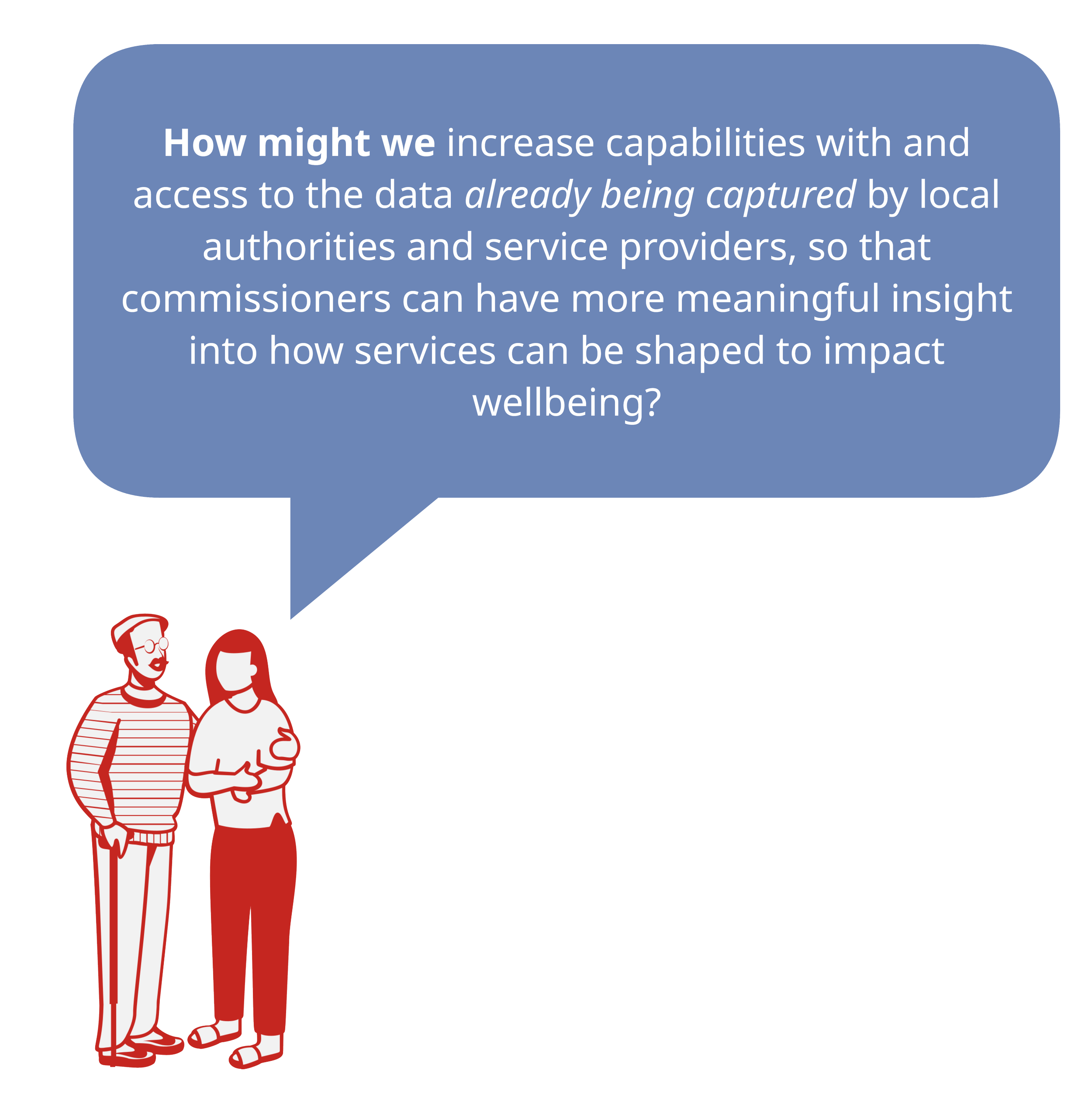
Local authorities and service providers gather and store much more data on care services than is currently being used, yet commissioners lack the information or access to it that can help them understand real impacts of services on people's wellbeing.
1. Care that centres people and their circles of support
2. Outcomes that matter to people and build on their strengths
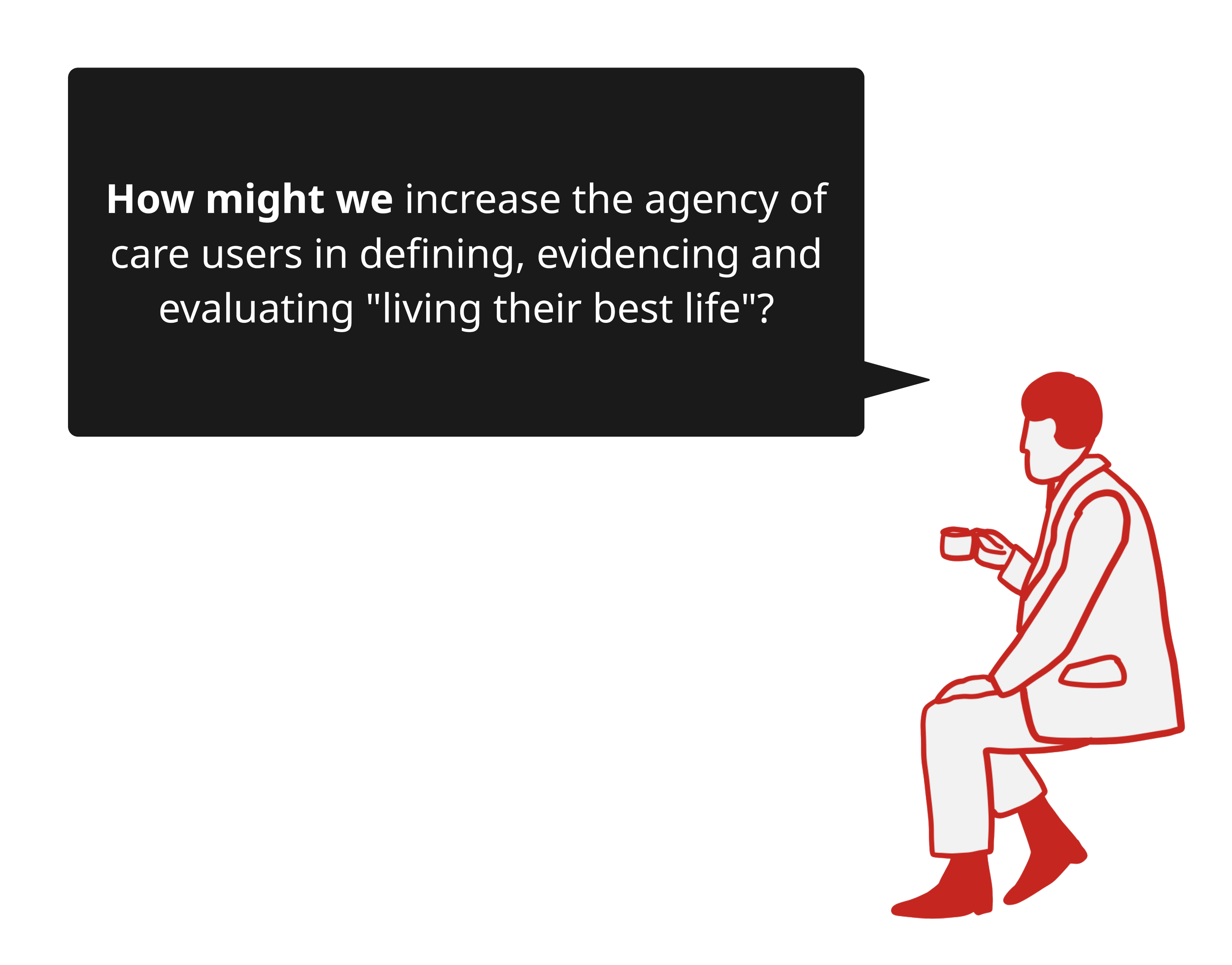
Co-production of care outcomes looks different based on varying capabilities and needs, but doesn't typically involve co-creating the evaluation of care. Care users could have more agency in defining, evidencing and evaluating "living their best life."
3. Services that providers can sustainably delivery
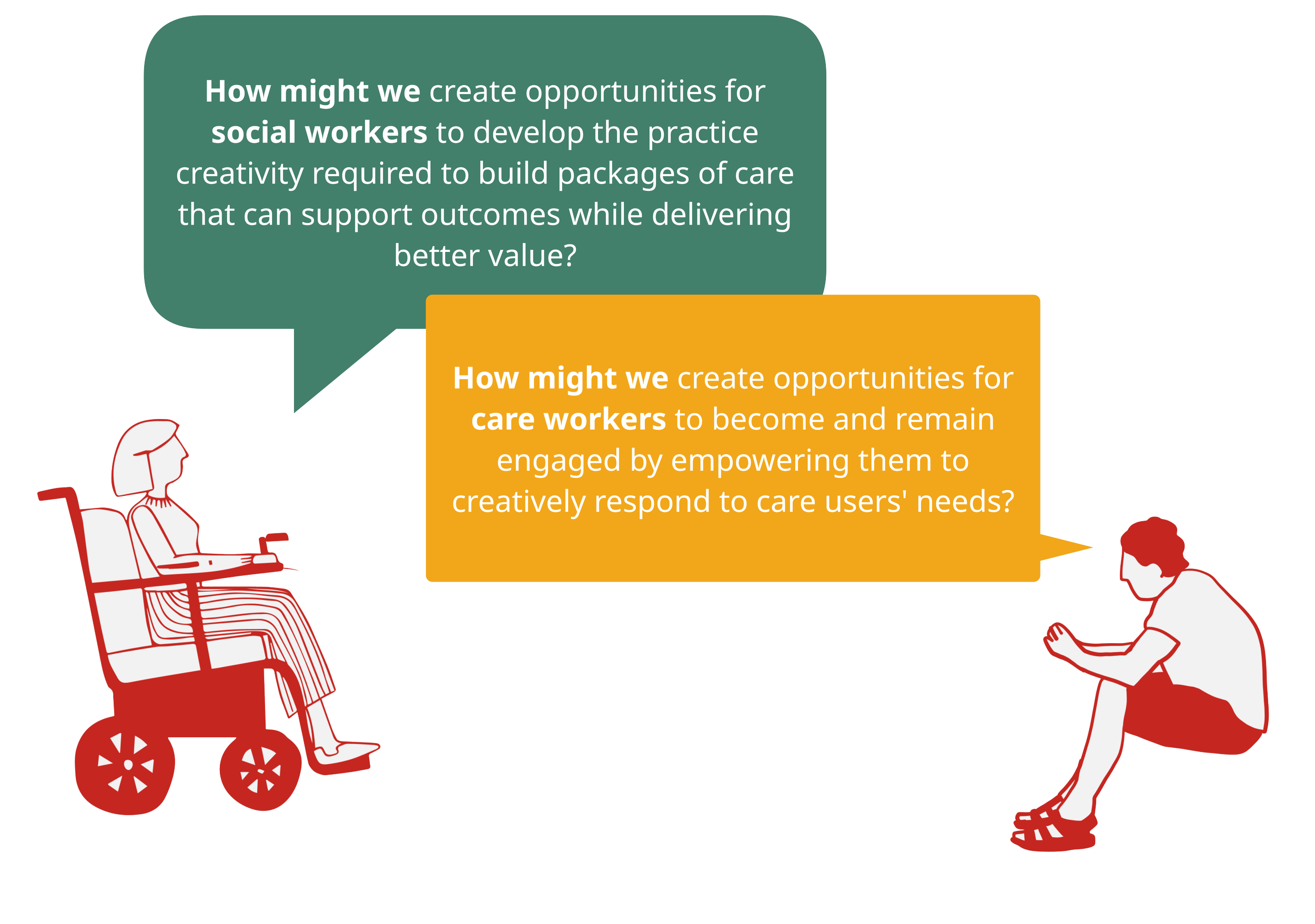
Due to increasing caseloads and backlogs of statutory reviews, social workers spend a bare minimum of time on assessing and reviewing care needs. There is no space in such a process for thinking creatively about how to set outcomes-focused care goals or meet a person’s needs in strengths-based and person-centred ways. This leaves new social workers with few opportunities to develop the practice creativity required to create packages of care that can accomplish outcomes while also saving costs for the person and the local authority.
4. Spend that achieves wellbeing in communities
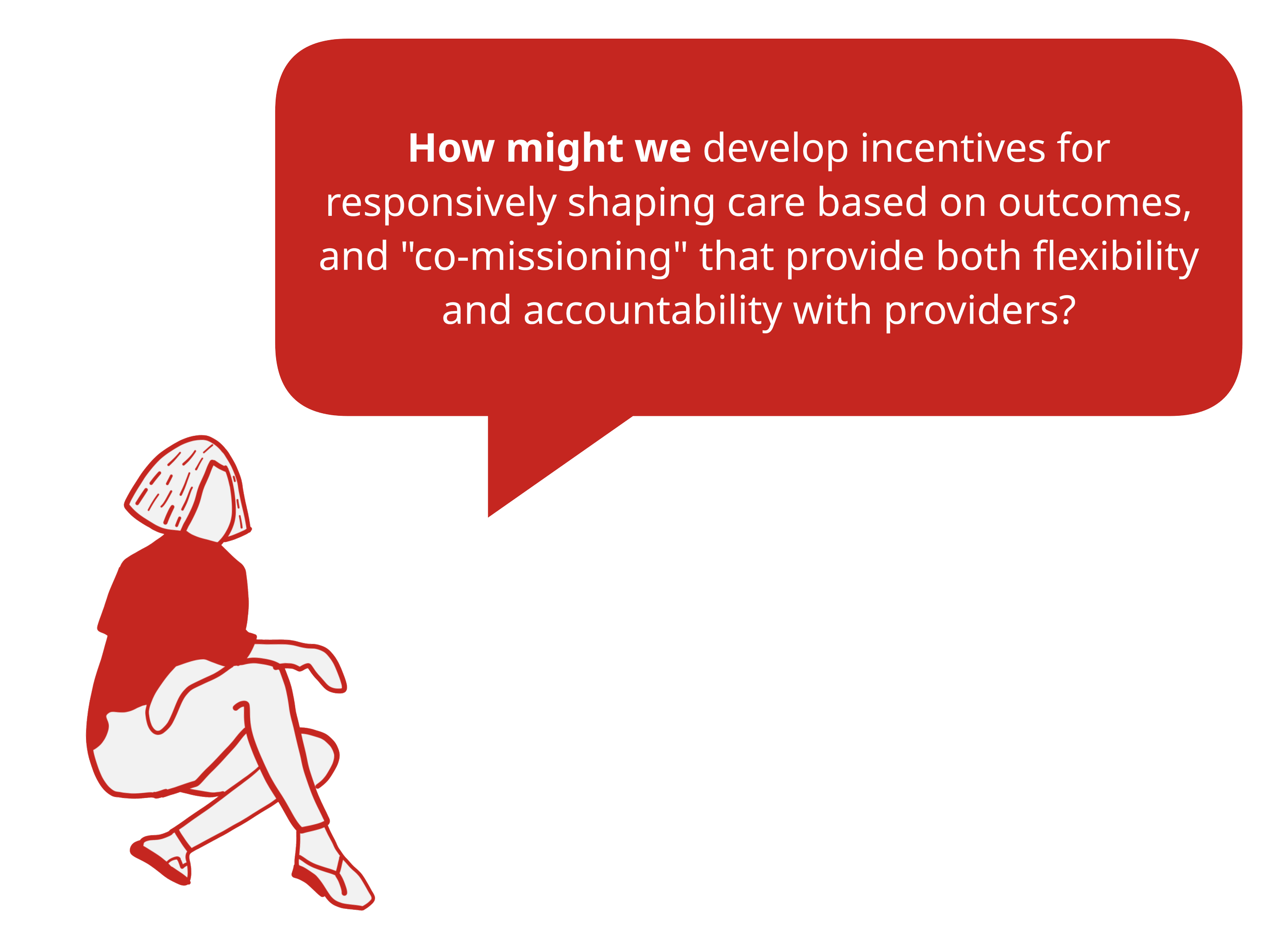
Incentives for responsively shaping care based on outcomes, and co-missioning (collaboration agreements between values-aligned service providers and commissioners) are two promising approaches that provide both flexibility and accountability with providers.